
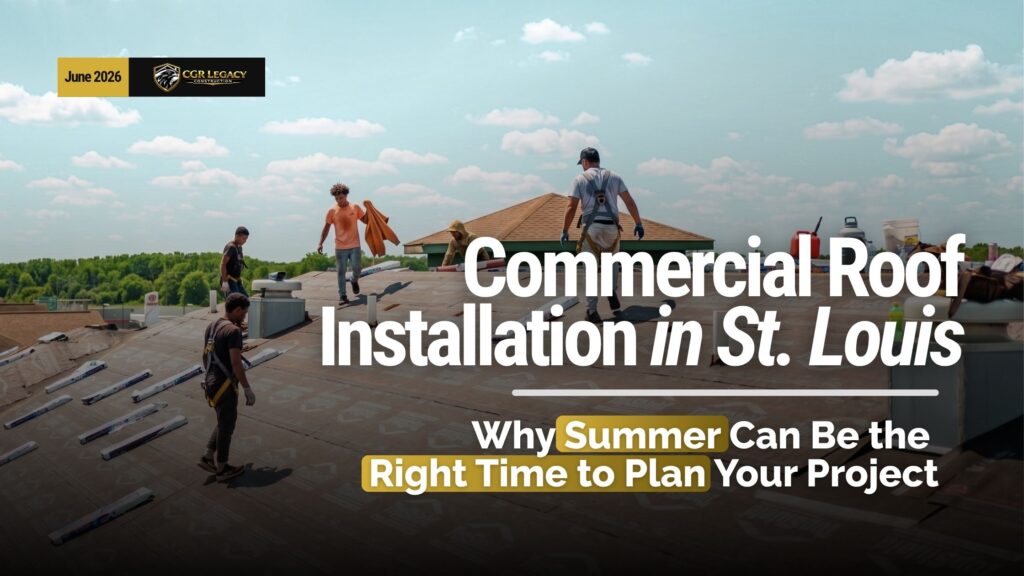
Is Summer the Best Time for Commercial Roof Installation in St. Louis?
Summer is often one of the best times for commercial roof installation in St. Louis because the weather is warmer, the days are longer, and roof projects can often move more smoothly. For many business owners, summer is also a smart time to plan commercial roof replacement before fall storms and winter weather cause bigger problems.
A commercial roof protects your building, employees, customers, equipment, and daily business operations. If your roof is getting older, leaking, or needing more repairs than usual, summer may be the right time to take care of it before the damage gets worse.
Why Is Summer a Strong Season for Commercial Roof Installation?
Summer is a strong season for commercial roof installation because roofing crews often have more daylight and better weather to work with. In St. Louis, that can make it easier for business owners to schedule roof work before heavy fall rain or winter weather adds more stress to the building.
For commercial properties, timing matters. A worn roof can lead to leaks, water stains, ceiling damage, and repeated repair calls. If the building already has an aging roof system, summer gives owners a chance to plan instead of waiting for an emergency.
Summer can also help the roofing project move more smoothly. With more daylight, crews may have more time to complete each part of the job, from preparing the roof to cleaning up afterward.
That does not mean every building should wait until summer. If a roof is actively leaking, holding water, or showing signs of storm damage, the best time to call is right away.
What Should Business Owners Know Before Commercial Roof Replacement?
Before scheduling commercial roof replacement, business owners should understand the current condition of the roof, how long the job may take, and how the work could affect daily operations.
A roof project may impact parking, entrances, deliveries, employees, tenants, or customers. That is why planning ahead is important.
A professional inspection should look for leaks, worn areas, damaged edges, standing water, and signs that the current roof system is no longer protecting the building properly. This helps the owner understand whether a repair is enough or whether replacement is the better long-term option.
Business owners should ask:
- Is the roof leaking now?
- Is there visible storm damage?
- Has the roof needed repeated repairs?
- Is water sitting on flat areas after rain?
- Are repair costs becoming more frequent?
- Will the building stay open during the project?
- What is included in the estimate?
- Are repair costs becoming more frequent?
- Are repair costs becoming more frequent?
CGR Legacy Construction serves the St. Louis metro area and focuses on fast inspections, honest estimates, and clean installs built for Missouri weather. That matters because commercial roof replacement should never feel confusing or rushed. The owner should know what was found, what is recommended, and what happens next.
What Happens During a Commercial Roof Project?
A commercial roof project usually starts with an inspection and ends with cleanup and a final review. The exact steps depend on the building, roof type, current damage, and whether old roofing needs to be removed first.
Roof Inspection
The first step is to inspect the existing roof system. A contractor checks the roof surface, edges, areas where water drains, and any signs that water may be getting inside the building. This step helps determine whether the building needs a repair or full commercial roof replacement.
Photos and Notes
Photos and notes help show what is happening on the roof. This is especially helpful for business owners who cannot safely see the roof themselves. Photos also create a clear record of the roof's condition. If storm damage is involved, these photos may help support the next steps with insurance questions.
Written Estimate and Project Plan
After the inspection, the contractor should provide a written estimate and project plan. This should explain the recommended work, materials, timeline, and what the business owner should expect during the project. CGR's process includes photos of findings, a written estimate, a job plan, and no surprise add-ons.
Getting the Roof Ready
Some buildings need old roofing removed before the new roof is installed. Others may need repairs or prep work before the new roof can go on. This step matters because the new roof needs a strong, ready surface underneath. If this part is rushed, the building may face leaks or repair problems later.
New Roof Installation
Once the roof is ready, the crew begins the main commercial roof installation. A complete commercial roof system includes the main roofing material and the other parts that help protect the building from rain, heat, and wind. The goal is not just to cover the building. The goal is to install a roof that helps protect the property from Missouri weather.
Cleanup and Final Review
After the installation is complete, the crew should clean the work area and review the finished project. The owner should understand what work was done, what to watch for, and how to care for the roof moving forward. A clean job site and final review are important parts of a professional roof replacement process, especially for commercial properties where employees, customers, or tenants may be nearby.
What Types of Commercial Roofs Work Best in St. Louis?
The best commercial roofing systems for St. Louis depend on the building, roof shape, budget, and current roof condition. Many commercial buildings have flat or low roofs, which need good water flow and careful installation to help prevent water from sitting too long.
Common commercial roofing systems may include flat roofs, low roofs, metal roofs on certain buildings, and roof coatings when the roof is in the right condition.
A good roof system is more than the top layer. It includes the materials and details that help move water away, protect the building, and lower the chance of leaks.
For St. Louis business owners, the best option is usually the one that balances protection, budget, maintenance needs, and long-term value. A contractor should explain the options in clear, simple language so the owner can make a confident decision.
What Affects Commercial Roof Replacement Cost?
Commercial roof replacement cost depends on the size of the roof, the condition of the roof, the material used, how easy the roof is to access, and whether old roofing needs to be removed.
There is no honest one-size-fits-all price without looking at the building first. Two buildings with the same roof size can have very different costs.
Factors that can affect commercial roof replacement cost include:
- Roof size
- Type of roofing material
- Condition of the existing roof
- Amount of old roofing that needs to be removed
- Damage under the current roof
- Labor and scheduling needs
- Weather delays
Business owners should be careful with vague estimates that do not explain what is included. A low price may not be helpful if it leaves out important details or leads to surprise charges later.
The best way to understand commercial roof replacement cost is to schedule an inspection and request a written estimate.
Is Summer Always the Best Time for Commercial Roof Installation?
Summer is often a good time for commercial roof installation, but it is not always the only right time. If a roof is leaking, holding water, or causing damage inside the building, waiting for the “perfect season” may cost more in the long run.
Summer is best for planned projects. It gives business owners time to review options, prepare the property, schedule the work, and complete the roof replacement process before harsher weather arrives.
However, emergency problems should not wait. If a commercial building has water stains, repeated leaks, loose roof edges, or storm damage, it may need attention right away.
- Water stains on ceilings or walls
- Leaks after heavy rain
- Loose metal or roof edges
- Standing water on flat roof areas
- Worn, cracked, or bubbling roof surfaces
- Worn, cracked, or bubbling roof surfaces
- Musty smells inside the building
For planned commercial roof replacement, summer can be a smart window. For active leaks, the right time to act is now.
How Can You Compare Roofing Companies in St. Louis?
When comparing roofing companies in St. Louis, business owners should look for local experience, clear communication, written estimates, proof of insurance, and a process that feels organized from start to finish.
The right contractor should be able to explain the roof problem in simple terms. They should show what they found, answer questions clearly, and recommend the right solution without pressure.
When reviewing roofing companies in St. Louis, ask about:
- Local experience with Missouri weather
- Commercial roofing experience
- Inspection process
- Photos of roof problems
- Written estimates
- Warranty information
- Cleanup expectations
- Project timeline
- Communication before and during the job
CGR Legacy Construction serves St. Louis, St. Charles, and surrounding areas. The company’s services include residential roofing, storm restoration, siding, and gutters, with key selling points such as free inspections, same-day or next-day scheduling when possible, insurance claim help, quality workmanship, and strong warranties.
The best roofing companies in St. Louis help owners feel informed, not overwhelmed.
What Should You Ask St. Louis Roofing Contractors Before You Schedule?
Before hiring St. Louis roofing contractors, business owners should ask questions about the roof inspection, project timeline, materials, warranty, cleanup, and what happens if unexpected damage is found.
Good St. Louis roofing contractors should be willing to explain each step of the project.
Helpful questions include:
- What did you find during the inspection?
- Do I need repair or full replacement?
- What type of roof system do you recommend?
- What is included in the estimate?
- How long will the project take?
- Will my business need to close during the work?
- How will you protect the property?
- What warranty is included?
- Who do I contact if I have questions?
Trust matters because a commercial roof protects the building, employees, inventory, equipment, and daily operations. Experienced St. Louis roofing contractors should provide clear answers before the project begins.
When Should You Call About a Commercial Roof in St. Louis?
You should call about a commercial roof when you notice leaks, standing water, repeated repairs, visible wear, storm damage, or rising repair costs. These signs may mean the current roof is no longer protecting the building the way it should.
Calling early gives you more control. You can plan the budget, review the best options, and schedule the project before weather or water damage forces an emergency decision.
CGR Legacy Construction offers free inspections, photos of roof problems, written estimates, and a start-to-finish plan for property owners in the St. Louis area.
If your building needs commercial roof installation, summer can be a smart time to start the conversation. If your building needs urgent commercial roof replacement, waiting could lead to more damage and higher costs.
Frequently Asked Questions
How long does commercial roof installation take?
The timeline depends on roof size, material, access, weather, and how much prep work is needed. A smaller project may move faster, while a larger or more damaged roof may take longer.
Is summer a good time to replace a roof?
Yes. Summer is often a good time to replace a roof because warmer weather and longer daylight hours can help the project move more smoothly. It also gives property owners time to fix roofing issues before fall storms and winter weather.
What is included in the roof replacement process?
The roof replacement process may include removing old roofing, repairing damaged areas, preparing the roof, installing the new materials, cleaning the site, and reviewing the completed work.
What is the 25% rule in roofing?
The 25% rule usually refers to a local rule or insurance guideline that may require a larger part of the roof, or sometimes the full roof, to be replaced if more than 25% is damaged or repaired within a certain period. Rules can vary by location, so it is best to ask a local roofing contractor or building department.
Do roofers charge more in the summer?
Roofing prices can be higher in summer because demand is often higher. Cost also depends on roof size, material, damage, labor, and scheduling. Getting an inspection and written estimate is the best way to know the actual price.
How long does it take to install a commercial roof?
A commercial roof installation can take a few days to a few weeks, depending on the roof size, material, weather, access, and how much prep work is needed. A roofing contractor can give a more accurate timeline after inspecting the building.